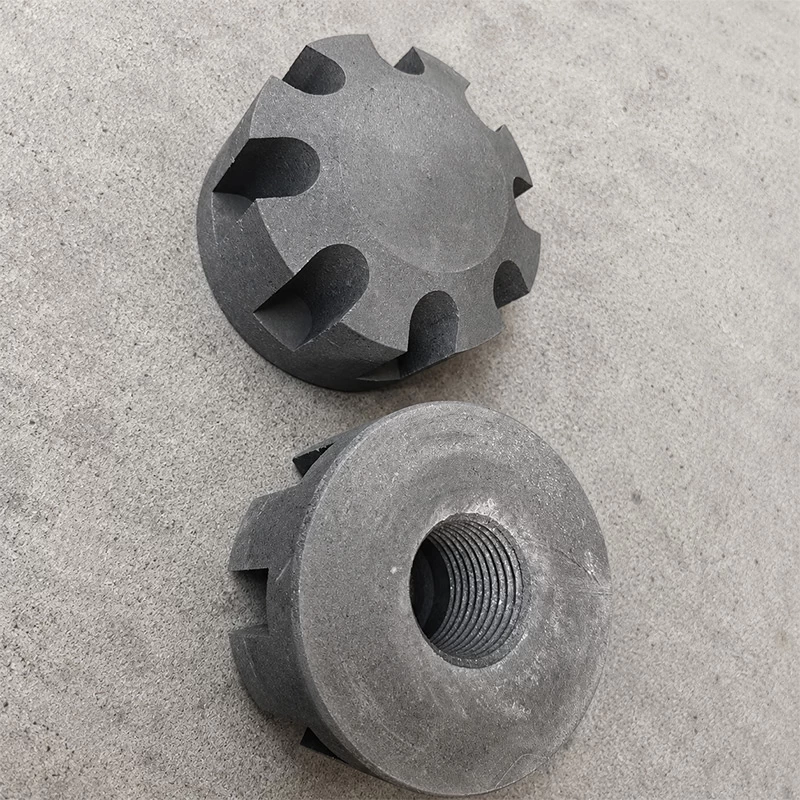
**Exploring the Graphite Rotor ¢15090: Applications, Advantages, and Technical Insights**
In the world of industrial machinery and manufacturing, components such as rotors play a crucial role in ensuring operational efficiency and longevity. Among the various types of rotors available in the market, the **Graphite Rotor ¢15090** stands out due to its unique material properties and design specifications. This article delves into the technical aspects, applications, benefits, and key considerations when working with the Graphite Rotor ¢15090, providing an in-depth understanding for engineers, designers, and industry professionals.
---
### Understanding the Graphite Rotor ¢15090
Before diving into applications and advantages, it is important to define what a graphite rotor is and why the ¢15090 model is significant.
- **What is a Graphite Rotor?**
A rotor is a rotating component of a mechanical device, often found in motors, pumps, compressors, and turbines. When constructed from graphite, these rotors benefit from graphite’s inherent properties—such as high thermal conductivity, chemical resistance, and self-lubricating characteristics—that make them suitable for demanding environments.
- **The Significance of ¢15090**
The designation ¢15090 typically refers to specific dimensional or model identifiers. In this case, it may represent a rotor with a diameter of 150 mm and a length or another dimension of 90 mm. Such precise sizing is critical for compatibility and performance in specialized equipment.
---
### Material Advantages of Graphite in Rotors
Graphite as a material offers numerous benefits that make it a preferred choice for rotors in certain industrial applications:
1. **High Thermal Conductivity**
Graphite efficiently dissipates heat generated during rotor operation, which helps maintain optimal operating temperatures and prevents overheating that could damage the system.
2. **Chemical Resistance**
Unlike metals that can corrode or degrade when exposed to harsh chemicals or oxidizing agents, graphite maintains its integrity, making it suitable for environments where chemical exposure is inevitable.
3. **Self-Lubricating Properties**
Graphite’s layered atomic structure allows layers to slide over each other easily, reducing friction without the need for additional lubricants. This reduces maintenance requirements and enhances the rotor’s lifespan.
4. **Lightweight Yet Strong**
Compared to metal rotors, graphite rotors are lighter, which can improve rotational speed and reduce energy consumption. Despite being lightweight, they offer sufficient strength for many industrial uses.
5. **Electrical Conductivity**
Graphite’s conductive nature enables its use in electrical machines such as motors and generators, where the rotor needs to conduct current or magnetic flux efficiently.
---
### Key Industrial Applications
The Graphite Rotor ¢15090 finds its place in several industries due to its versatile properties. Here are some notable applications:
- **Electric Motors and Generators**
Graphite rotors are used in electric machines where weight reduction and thermal management are crucial. Their ability to handle high temperatures without deforming makes them ideal for high-performance motors.
- **Pumps and Compressors**
In fluid handling equipment, the self-lubricating nature of graphite reduces wear and tear on the rotor shaft and bearings, leading to longer service intervals.
- **Chemical Processing Equipment**
Where rotors come into contact with corrosive fluids, graphite’s chemical inertness ensures reliable operation without material breakdown.
- **Aerospace and Automotive Components**
Lightweight graphite rotors contribute to fuel efficiency and reduce inertial mass in rotating parts, improving acceleration and deceleration characteristics.
- **Energy Sector**
In turbines and alternators, graphite rotors assist in maintaining stable performance under fluctuating thermal and mechanical loads.
---
### Design and Manufacturing Considerations
When selecting or designing a Graphite Rotor ¢15090, several factors must be accounted for to optimize performance:
- **Precision Machining**
Graphite requires careful machining techniques due to its brittle nature. Specialized cutting tools and controlled environments ensure that the rotor meets tight tolerances without cracking.
- **Dimensional Stability**
Although graphite handles temperature changes well, the design must allow for slight thermal expansion or contraction to prevent stress buildup.
- **Surface Finish and Coatings**
Surface treatment can improve wear resistance and prevent particle shedding, which is essential in cleanroom or sensitive applications.
- **Balancing and Alignment**
Rotors must be dynamically balanced to avoid vibrations that can lead to premature failure. Graphite’s lightweight property makes balancing somewhat easier but still critical.
---
### Integration with Modern Design Practices
In contemporary engineering, integrating rotors like the Graphite Rotor ¢15090 involves adhering to precise design parameters, many of which overlap with modern CSS design concepts in digital interfaces—albeit metaphorically.
For instance, consider the following parallels in a physical to digital analogy:
- **Margin and Padding (Mechanical Clearances)**
Just as margin and padding in CSS create space around elements, mechanical clearances around the rotor ensure smooth rotation without unwanted contact or friction.
- **Box-Sizing (Dimensional Control)**
Similar to controlling how width and height are calculated in CSS, manufacturers control rotor dimensions to fit within housing constraints precisely.
- **Font-Family and Font-Size (Material Specification and Size)**
Choosing the right “font-family” is akin to selecting appropriate graphite grades, while “font-size” corresponds to rotor dimensions like diameter and length.
- **Background and Color (Surface Treatment)**
Surface finishes and coatings affect the rotor’s interaction with its environment, much like background colors influence visual perception.
- **Display (Grid, Flex) and Position (Layout)**
The rotor’s positioning within an assembly mirrors layout strategies, ensuring alignment and function.
These conceptual comparisons underscore the importance of precision, spacing, and material properties, whether in digital design or physical rotor manufacturing.
---
### Maintenance and Longevity
One of the major selling points of graphite rotors is their reduced maintenance burden. However, proper care is still necessary:
- **Regular Inspection for Wear**
Although graphite is durable, routine checks for surface degradation or cracks can prevent catastrophic failures.
- **Environmental Controls**
Avoiding exposure to extreme moisture or contaminants preserves graphite’s properties.
- **Handling Precautions**
Due to graphite’s brittleness, careful handling during installation and servicing is paramount.
With these practices, the Graphite Rotor ¢15090 can deliver years of reliable service in demanding environments.
---
### Challenges and Limitations
Despite many advantages, graphite rotors are not universally applicable:
- **Mechanical Fragility**
Graphite is more brittle than metals, which limits its use in applications involving heavy mechanical shocks or impacts.
- **Cost Considerations**
The specialized manufacturing processes and material costs may be higher compared to conventional metal rotors.
- **Limited High-Speed Capability**
At extremely high rotational speeds, graphite rotors may experience structural challenges that require advanced engineering solutions.
---
### Future Trends and Innovations
Research continues to expand the capabilities of graphite rotors through:
- **Composite Materials**
Combining graphite with carbon fibers or resins enhances strength and toughness while retaining beneficial properties.
- **Nanotechnology**
Incorporating graphene and other nanomaterials could improve thermal conductivity and durability.
- **Advanced Manufacturing**
Techniques such as 3D printing enable complex geometries and customized rotor designs previously unattainable.
These innovations promise to broaden the scope and performance envelope of graphite rotors like the ¢15090.
---
### Conclusion
The Graphite Rotor ¢15090 exemplifies the intersection of material science and precision engineering, offering a solution tailored for high-performance, chemically aggressive, and thermally demanding environments. Its unique properties—thermal conductivity, chemical resistance, lightweight construction, and self-lubrication—make it invaluable across multiple sectors.
Understanding its design considerations, advantages, and limitations allows industry professionals to implement these rotors effectively, ensuring enhanced machine efficiency and longevity. As technological advancements continue, the role of graphite rotors is poised to grow, driven by innovation and the persistent demand for superior performance components.
---
**Keywords:** margin, padding, box-sizing, font-family, background, color, width, max-width, border-radius, position, overflow, content, linear-gradient, rgba, display (grid, flex, inline-flex), grid-template-columns, gap, align-items, z-index, font-size, font-weight, letter-spacing, text-transform