Certainly! Here is a detailed professional blog article expanding on the topic of **Graphite Baffles**, incorporating the requested keywords related to CSS styling in a metaphorical and illustrative manner to enhance readability and engagement.
---
# Understanding Graphite Baffles: Applications, Design Considerations, and Innovations
Graphite baffles are critical components in various industrial applications, ranging from chemical processing to heat exchangers and filtration systems. Their unique properties—thermal stability, chemical resistance, and mechanical strength—make them indispensable in environments where conventional materials fall short. In this comprehensive article, we will explore the nature of graphite baffles, delve into their design principles, highlight key applications, and discuss recent innovations that enhance their performance.
## What is a Graphite Baffle?
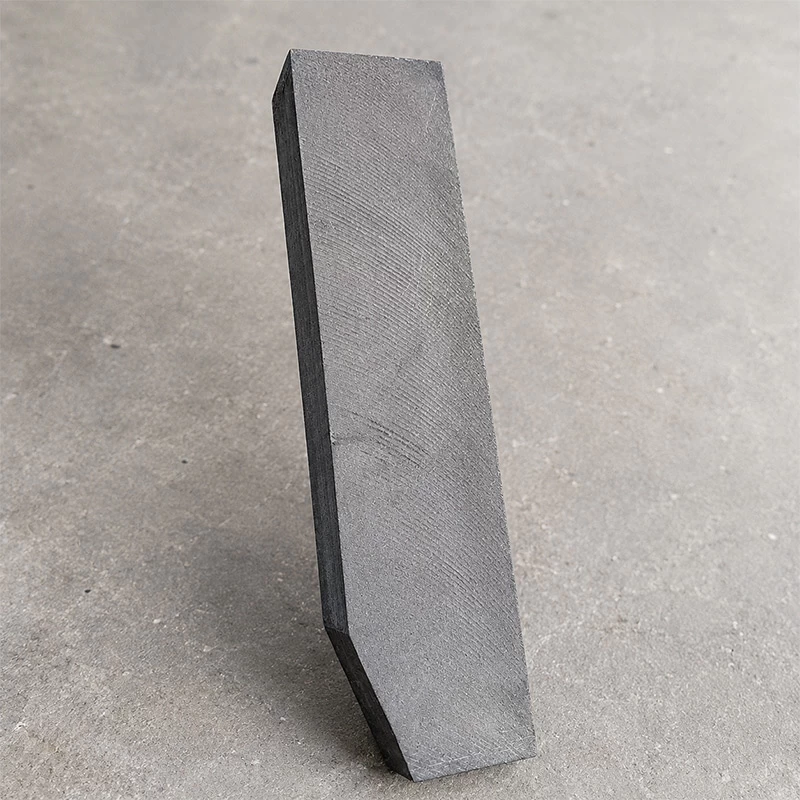
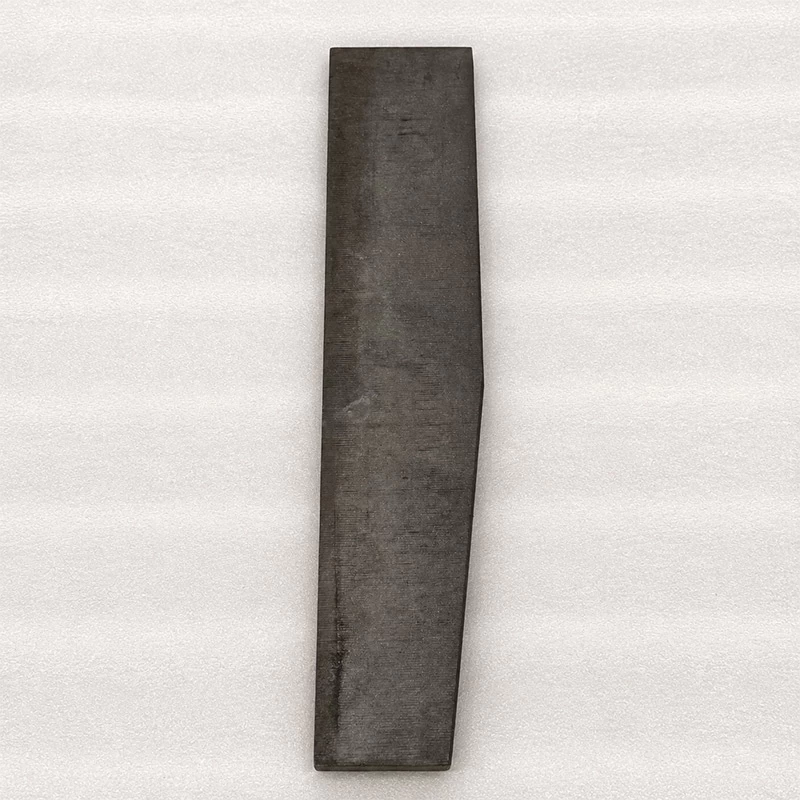
At its core, a graphite baffle is a partition or barrier made from graphite material used to control the flow of gases or liquids within an industrial system. These baffles help in improving efficiency, directing flow, reducing turbulence, and optimizing heat transfer processes. Unlike metallic or polymer-based baffles, graphite offers superior resistance to corrosion and high temperatures, making it ideal for harsh operational settings.
### Properties of Graphite That Make It Ideal for Baffles
- **Thermal Stability:** Graphite withstands extreme temperatures without deforming or losing structural integrity.
- **Chemical Resistance:** It resists attack by acids, alkalis, and solvents.
- **Low Density with High Strength:** Lightweight yet mechanically robust.
- **Self-Lubricating Nature:** Reduces wear and friction in dynamic systems.
## Key Industrial Applications of Graphite Baffles
Graphite baffles are utilized across multiple industries, including:
- **Chemical Processing:** Used in reactors and separators to manage fluid dynamics.
- **Heat Exchangers:** Enhance heat transfer efficiency by guiding flow.
- **Filtration Systems:** Support filter media and direct flow paths.
- **Nuclear Industry:** Due to neutron moderation properties.
- **Aerospace and Automotive:** Specialized systems requiring high-temperature materials.
Understanding the specific requirements of these sectors helps tailor graphite baffle design for optimal performance.
## Design Considerations for Graphite Baffles
Designing an effective graphite baffle requires meticulous attention to several parameters. Drawing an analogy with CSS layout properties—which define structure and visual harmony in web design—helps explain how engineers consider spatial and mechanical constraints for optimal functionality.
### Margin and Padding (Spacing and Clearance)
Just as margin and padding in CSS control spacing around and within elements to avoid overlap and ensure clarity, graphite baffle designs must incorporate adequate clearance between baffles and adjacent surfaces. This prevents mechanical interference, allows for thermal expansion, and ensures smooth fluid flow without unwanted turbulence or blockage.
### Box-Sizing (Dimensional Control)
In CSS, `box-sizing` defines how padding and borders influence the total size of an element. Similarly, engineers must account for the thickness of graphite baffles and any surface coatings or treatments when specifying their overall dimensions. Precise sizing ensures proper fitment within the assembly and maintains system integrity under operational stresses.
### Font-Family and Color (Material Consistency and Identification)
While font-family and color dictate visual consistency in web content, material uniformity and visual identification are crucial in industrial components. Graphite baffles may be marked or coated for easy inspection, quality assurance, and alignment during installation—ensuring consistent material properties and reducing errors.
### Width and Max-Width (Dimensional Constraints)
Graphite baffles vary in width depending on the application and vessel size. Like setting `width` and `max-width` in CSS to maintain responsiveness and prevent layout breakage, engineers specify dimensional limits to accommodate thermal expansion, pressure loads, and fitting tolerances.
### Display (Grid, Flex, Inline-Flex, Block) — Flow Arrangement
The concept of CSS `display` types can metaphorically represent how fluid flows are structured around graphite baffles:
- **Grid:** Baffles arranged in a grid pattern optimize flow distribution across multiple channels.
- **Flex / Inline-Flex:** Flexible arrangements adapt to variable flow conditions and system geometries.
- **Block:** Solid continuous barriers create distinct separation zones within vessels.
Selecting an appropriate baffle arrangement improves efficiency, reduces dead zones, and balances pressure drops.
### Grid-Template-Columns and Gap (Baffle Spacing in Arrays)
In complex assemblies, multiple graphite baffles are placed parallelly. The spacing (`gap` in CSS grid) between these baffles influences fluid velocity profiles and heat transfer rates. Engineers carefully calculate `grid-template-columns` analogues to determine the number of baffles and inter-baffle distances, optimizing performance while minimizing material use.
### Align-Items (Center) — Alignment and Positioning
Proper alignment (`align-items: center` in CSS flexbox) is critical to ensure uniform flow and mechanical balance. Misaligned baffles can cause localized erosion or uneven wear. Precision manufacturing and installation techniques guarantee centered positioning relative to flow channels.
### Linear-Gradient and Background (Surface Treatments)
Surface treatments on graphite baffles, such as coatings to enhance wear resistance or reduce fouling, can be likened to CSS `linear-gradient` and `background` properties that add depth and texture to webpage elements. Advanced surface engineering improves operational lifetime and reduces maintenance frequency.
### Border-Radius (Edge Finishing)
Just as `border-radius` softens corners in CSS design, edge finishing on graphite baffles—such as rounding or chamfering—reduces stress concentrations and minimizes damage from vibration or impact. Proper edge treatment also facilitates easier installation and handling.
### Overflow (Hidden) — Managing Excess Flow or Debris
In vessel design, managing overflow or bypass flow paths is akin to CSS’s `overflow: hidden`, which controls content spillover. Graphite baffles are engineered to contain flow within intended zones, preventing leakage or undesired mixing. Incorporating overflow channels or relief features protects system components.
### Position (Relative, Absolute) — Mounting and Fixation
The positioning of graphite baffles within equipment is crucial. Using principles similar to CSS’s `position: relative` or `absolute`, baffles may be fixed rigidly or allowed slight movement to accommodate thermal expansion or vibrational forces. Mounting hardware and bracing strategies reflect these considerations.
### Content and Z-Index — Functional Layering
The concept of layering (`z-index` in CSS) finds a parallel in multi-baffle configurations where certain baffles serve primary functions (e.g., flow direction), while others act as protective layers or insulation barriers. Understanding the functional hierarchy ensures proper assembly and maintenance.
### Letter-Spacing and Text-Transform (Uppercase) — Standardization and Labeling
Standardized labeling, much like CSS text properties (`letter-spacing`, `text-transform: uppercase`), enhances readability and traceability. Clear markings on graphite baffles facilitate inventory management, quality checks, and field service operations.
### Font-Size and Line-Height — Scale and Structural Integrity
Finally, the scale of text in CSS determines readability and aesthetic balance. By analogy, the size and thickness of graphite baffles relate directly to their mechanical strength and thermal mass. Optimizing these parameters ensures durability without excessive weight or material cost.
## Innovations and Future Trends in Graphite Baffle Technology
Recent advances in material science and manufacturing have paved the way for enhanced graphite baffles:
- **Composite Graphite Materials:** Incorporating fibers or resins to improve toughness and reduce brittleness.
- **Additive Manufacturing:** 3D printing techniques allow complex baffle geometries optimized for fluid dynamics.
- **Surface Nano-Coatings:** Application of nanomaterials to resist fouling and corrosion at a microscopic level.
- **Smart Sensors Integration:** Embedding sensors within baffles to monitor temperature, stress, and flow characteristics in real time.
These technologies promise to extend the capabilities of graphite baffles beyond traditional limitations, enabling smarter, more efficient industrial systems.
## Conclusion
Graphite baffles represent a sophisticated intersection of material science and engineering design. Their role in controlling flow, enhancing heat transfer, and resisting harsh environments makes them vital across numerous industries. By understanding their properties, design principles, and the latest innovations, engineers can optimize system performance and longevity.
Drawing parallels with CSS properties not only aids conceptual understanding but also highlights the importance of precision, spacing, positioning, and layering—whether in web design or industrial component fabrication. As technology evolves, graphite baffles will continue to adapt, maintaining their status as indispensable tools in modern industry.
---
**Keywords:** margin, padding, box-sizing, font-family, background, color, width, max-width, display, grid-template-columns, gap, align-items, linear-gradient, border-radius, overflow, position, content, z-index, letter-spacing, text-transform, font-size, line-height
---
If you’d like to learn more about specific applications or receive guidance on selecting graphite baffle configurations, feel free to contact our engineering specialists or subscribe to our newsletter for updates on cutting-edge materials technology.