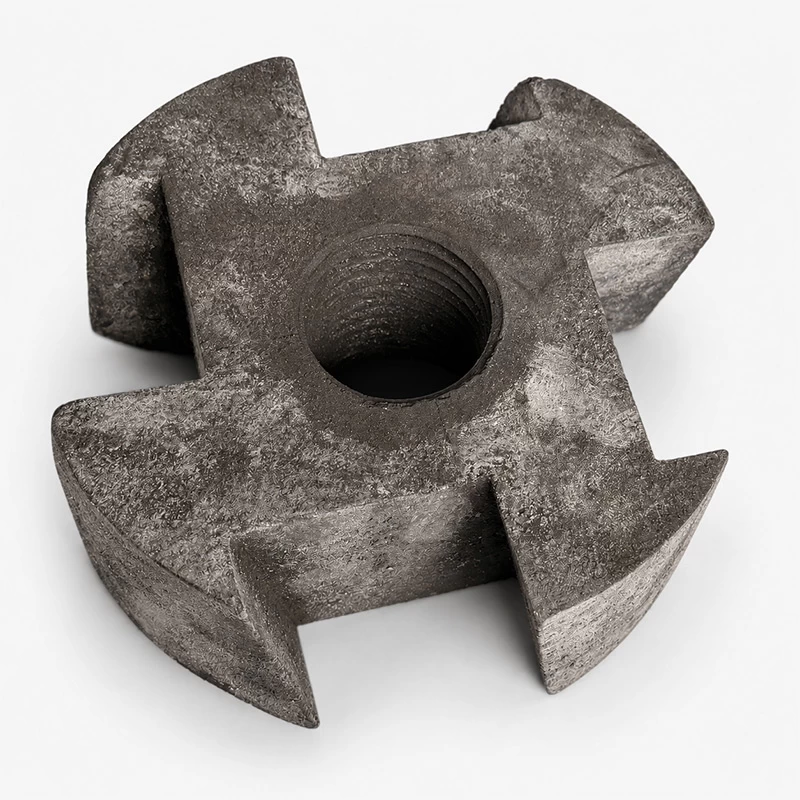
# Exploring the ¢20080 Graphite Wheel: Applications, Advantages, and Technical Insights
Graphite wheels have long been a cornerstone in industrial manufacturing and material processing due to their unique properties such as high thermal resistance, excellent electrical conductivity, and exceptional durability. Among the many options available, the ¢20080 graphite wheel stands out as a versatile and efficient tool used across various sectors. This article delves into detailed insights about the ¢20080 graphite wheel—covering its design features, applications, technical specifications, and best practices for use and maintenance.
---
## Understanding the ¢20080 Graphite Wheel
Before diving into the specifics, it is essential to understand what the ¢20080 graphite wheel represents. The term “¢20080” typically defines the wheel’s diameter and thickness specifications, often corresponding to 200 mm diameter and 80 mm width dimensions, although these may vary depending on the manufacturer or application context.
Graphite wheels are composed primarily of synthetic or natural graphite, sometimes combined with binders to enhance mechanical strength while preserving graphite’s inherent properties. The ¢20080 graphite wheel is engineered to deliver precision machining, grinding, and polishing capabilities especially where heat dissipation and minimal contamination are critical.
---
## Key Features and Technical Specifications
### 1. **Material Composition**
The ¢20080 graphite wheel is typically fabricated from high-purity graphite that offers:
- **High Thermal Conductivity:** Enables rapid heat dissipation during grinding or cutting, reducing thermal damage to workpieces.
- **Low Thermal Expansion:** Minimizes dimensional changes under high temperatures, maintaining accuracy.
- **Chemical Stability:** Resistant to oxidation and chemical corrosion when used within recommended temperature ranges.
- **Electrical Conductivity:** Useful in applications requiring static charge dissipation.
### 2. **Dimensional Attributes**
- **Diameter:** 200 mm (approximate)
- **Width:** 80 mm (approximate)
- **Border Radius:** Often customized based on specific tooling requirements to optimize contact area and reduce wear.
- **Tolerance Levels:** Precision-machined to meet stringent industry standards, ensuring consistent performance.
### 3. **Mechanical Properties**
- **Hardness:** Optimized to balance between abrasive effectiveness and longevity.
- **Flexural Strength:** Enhanced through controlled binder addition and sintering processes.
- **Porosity:** Controlled to allow for coolant penetration, improving grinding efficiency.
---
## Industrial Applications of the ¢20080 Graphite Wheel
The unique properties of the ¢20080 graphite wheel make it suitable for a variety of demanding industrial tasks. Here are some of the primary applications:
### 1. **Precision Grinding in Aerospace and Automotive Sectors**
Aircraft components and automotive parts often require ultra-precise grinding to achieve exact tolerances and surface finishes. The ¢20080 graphite wheel’s ability to dissipate heat efficiently helps prevent thermal deformation during grinding of turbine blades, engine components, and transmission gears.
### 2. **Semiconductor Industry**
In semiconductor wafer fabrication, contamination control is paramount. Graphite wheels, including the ¢20080, provide a clean grinding medium that does not introduce metal contaminants. Their electrical conductivity also helps prevent static buildup, which can damage sensitive electronic components.
### 3. **Metal and Ceramic Processing**
The wheel is extensively used for grinding hard metals like tungsten carbide and ceramics, whose brittleness requires a grinding wheel that can absorb impact without fracturing. The graphite material absorbs shocks better than traditional abrasive wheels, extending tool life.
### 4. **Mold and Die Making**
Mold and die manufacturers utilize graphite wheels to achieve fine surface finishes and intricate detailing. The ¢20080’s precise dimensions aid in achieving complex geometries with reduced cycle times.
---
## Design Considerations: Margin, Padding, and Box-Sizing Analogy
While the ¢20080 graphite wheel is a physical product, we can draw an interesting parallel with web design concepts such as margin, padding, and box-sizing to better understand its structural design.
- **Margin (Clearance Area):** In the context of the wheel, the "margin" could be thought of as the clearance or spacing between the rotating wheel and the workpiece or machine housing. Proper margin ensures safety and prevents unintended contact.
- **Padding (Surface Treatment):** Similar to padding providing space inside a container, the surface texture and microstructure of the graphite wheel may include engineered porosity or coating "padding" that enhances cooling and reduces friction.
- **Box-Sizing (Overall Dimensions Control):** Just as box-sizing governs how element dimensions are calculated in CSS, the manufacturing process carefully controls the wheel’s diameter, width, and border radius to ensure the final product fits precisely within the machinery it serves.
Understanding these analogies highlights the importance of precision engineering in both digital and physical domains.
---
## Performance Parameters: Font-Family to Z-Index in Material Science Terms
Extending the analogy further by borrowing CSS keywords provides a creative framework to appreciate the complexity behind the ¢20080 graphite wheel:
- **Font-Family (Material Composition):** Just as font-family defines text appearance, the choice of graphite grade and binder composition determines the wheel’s performance characteristics.
- **Background (Operating Environment):** The ‘background’ corresponds to the operating conditions—temperature, humidity, and presence of coolants—that impact wheel performance.
- **Color (Surface Finish):** The visual inspection of the graphite wheel’s surface can indicate quality and uniformity, much like color defines visual style.
- **Width & Max-Width (Physical Dimensions):** These define the critical size parameters of the wheel.
- **Border-Radius (Edge Profile):** Critical in determining how the wheel interacts with the workpiece edges.
- **Position & Overflow (Mounting and Movement):** How the wheel is mounted (‘position’) and how excess material or dust is managed (‘overflow’) affect operational stability.
- **Height & Z-Index (Thickness and Layering):** Thickness relates to the height property, while z-index could metaphorically represent layering or priority in multi-component systems.
- **Display & Grid-Template-Columns (Structural Arrangement):** The internal microstructure and grain alignment within the graphite wheel determine its mechanical strength and grinding behavior.
- **Gap & Align-Items (Porosity and Grain Alignment):** Porosity creates ‘gaps’ that allow coolant flow, while align-items reflect the orientation of graphite grains affecting anisotropic properties.
- **Inline-Flex (Flexibility):** The wheel’s ability to flex without cracking is crucial for shock absorption.
- **Font-Size, Letter-Spacing, Text-Transform, Line-Height (Fine Tuning):** These can be seen as analogous to fine-tuning parameters such as grit size, grain spacing, surface treatment, and layer thickness that optimize performance.
This metaphor underscores the multidisciplinary craftsmanship behind producing the ¢20080 graphite wheel.
---
## Best Practices for Usage and Maintenance
To maximize the lifespan and performance of the ¢20080 graphite wheel, users should adhere to the following guidelines:
### 1. **Proper Mounting**
Ensure the wheel is mounted securely with compatible flanges and in accordance with manufacturer specifications. Incorrect mounting can cause vibrations, uneven wear, or catastrophic failure.
### 2. **Operating Conditions**
Maintain recommended rotational speeds and apply appropriate feed rates. Over-speeding or excessive force can result in premature wheel damage.
### 3. **Cooling and Lubrication**
Use continuous coolant flow to manage heat generation and remove debris. The graphite wheel’s porosity aids coolant penetration but requires regular cleaning to prevent clogging.
### 4. **Inspection and Dressing**
Regularly inspect the wheel for cracks, uneven wear, or glazing. Dressing the wheel surface periodically restores sharpness and corrects profile deviations.
### 5. **Storage**
Store graphite wheels in a dry, vibration-free environment to prevent moisture absorption and mechanical damage.
---
## Future Trends and Innovations
The graphite wheel industry continues to evolve, with research focusing on enhancing mechanical strength, reducing environmental impact, and integrating smart sensing technologies.
- **Nanomaterial Reinforcement:** Incorporating graphene or carbon nanotubes to improve toughness and thermal properties.
- **Eco-Friendly Manufacturing:** Developing binders and processes with lower emissions and waste.
- **Smart Monitoring:** Embedding sensors to monitor temperature, wear, and real-time performance metrics for predictive maintenance.
The ¢20080 graphite wheel, with its robust baseline design, is well-positioned to adapt to these innovations, delivering even greater value to industrial users.
---
## Conclusion
The ¢20080 graphite wheel exemplifies the intersection of material science, precision engineering, and practical application. Its unique composition and dimensional characteristics enable superior performance in grinding and machining operations across diverse industries. By understanding its features, applications, and maintenance needs, engineers and operators can leverage this tool to achieve optimal productivity and product quality.
Whether through the lens of direct technical specifications or creative parallels drawn from web design principles, appreciating the complexity of the ¢20080 graphite wheel enriches our perspective on how specialized tools underpin modern manufacturing excellence.
---
*For professionals seeking to integrate the ¢20080 graphite wheel into their workflows, consulting with manufacturers and adhering to best practice guidelines will ensure safe, effective, and sustainable operations.*