# Exploring the Capabilities of the SNCQ1000 Hydrogen Analyzer for Molten Aluminum: A Comprehensive Overview
In the highly specialized field of metallurgy, particularly in aluminum production, maintaining material purity is paramount. Hydrogen contamination in molten aluminum can lead to significant defects such as porosity, which compromises the structural integrity and surface finish of the final product. To address this critical issue, advanced analytical tools like the **SNCQ1000 Hydrogen Analyzer** have been developed. This article provides a detailed overview of the SNCQ1000 model, focusing on its technological features, application benefits, and integration into modern aluminum foundries.
---
## Understanding Hydrogen Contamination in Molten Aluminum
Before diving into the specifics of the SNCQ1000, it is essential to grasp why hydrogen measurement is so vital in aluminum metallurgy. Aluminum has a high affinity for hydrogen, which becomes dissolved during melting. Upon solidification, hydrogen tends to form gas bubbles, causing porosity and weakening the metal’s mechanical properties.
Traditional methods of hydrogen detection often lack the precision or efficiency needed for real-time monitoring. This gap has fueled the demand for sophisticated analyzers capable of delivering rapid, accurate, and reliable hydrogen content readings directly from molten aluminum.
---
## The SNCQ1000 Hydrogen Analyzer: An Overview
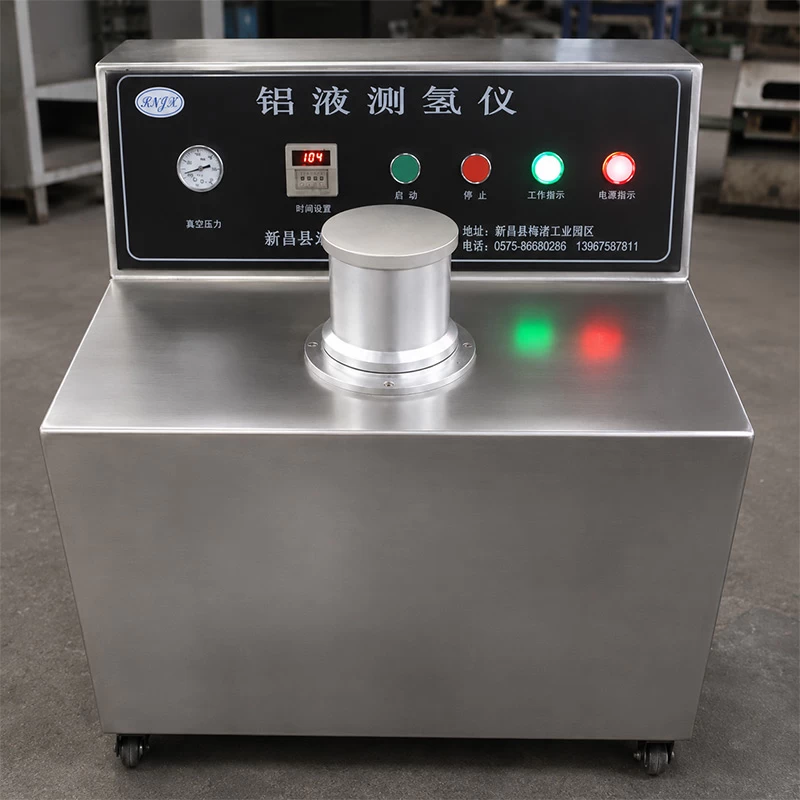
The SNCQ1000 is a state-of-the-art instrument designed specifically for measuring hydrogen levels in molten aluminum. Engineered with precision and robustness, it combines cutting-edge sensor technology with user-friendly interfaces to provide accurate, real-time data critical for process control.
### Key Features and Technical Specifications
- **Advanced Sensor Technology:** The SNCQ1000 utilizes electrochemical sensors optimized for hydrogen detection in high-temperature environments. These sensors are calibrated to withstand the harsh conditions of molten aluminum, ensuring durability and consistent performance.
- **Real-Time Analysis:** One of the standout capabilities is its ability to deliver near-instantaneous hydrogen concentration readings. This feature allows operators to make timely adjustments to the degassing process, minimizing waste and improving yield.
- **User Interface and Display:** Equipped with a high-resolution display and intuitive controls, the SNCQ1000 ensures ease of operation. The interface supports multiple languages and customizable settings, enhancing accessibility across diverse industrial settings.
- **Robust Construction:** Considering the challenging environment of aluminum foundries, the SNCQ1000 boasts a rugged design with materials resistant to corrosion and thermal stress.
- **Connectivity and Data Management:** The device supports modern communication protocols, enabling seamless integration with plant information systems (e.g., SCADA). This connectivity facilitates data logging, trend analysis, and quality assurance.
---
## Application Benefits of the SNCQ1000 in Molten Aluminum Processing
### Enhancing Quality Control
By accurately monitoring hydrogen levels, the SNCQ1000 helps metallurgists maintain stringent quality standards. The analyzer’s quick response time aids in detecting fluctuations early, enabling immediate corrective measures. Consequently, the incidence of porosity defects is markedly reduced, leading to parts with superior mechanical strength and surface aesthetics.
### Optimizing Degassing Processes
Degassing is a critical step in molten aluminum refining, where inert gases like argon or nitrogen are bubbled through the melt to remove dissolved hydrogen. The SNCQ1000 enables precise tracking of hydrogen reduction during degassing, allowing process engineers to optimize gas flow rates and treatment durations. This optimization not only improves efficiency but also reduces operational costs by avoiding excessive degassing.
### Minimizing Scrap and Rework
Defective castings caused by hydrogen porosity often lead to scrap or costly rework. With the SNCQ1000 providing reliable hydrogen measurements, the rate of defective outputs decreases, yielding direct cost savings and improved throughput.
### Compliance and Traceability
Many industries using aluminum components, such as aerospace and automotive sectors, require strict adherence to material standards. The SNCQ1000’s data recording capabilities ensure traceability, facilitating compliance with regulatory requirements and customer specifications.
---
## Integrating the SNCQ1000 into Modern Foundry Operations
For optimal performance, integrating the SNCQ1000 into existing foundry workflows and control systems is crucial. The following considerations outline best practices for successful deployment:
### Installation and Calibration
Proper installation involves positioning the hydrogen probe in a representative location within the molten aluminum bath, avoiding zones of turbulence or temperature extremes. Regular calibration using certified reference samples ensures measurement accuracy over time.
### Data Utilization and Process Control
Beyond mere data collection, the true value of the SNCQ1000 lies in actionable insights. Linking hydrogen content data with automated control systems enables dynamic adjustment of degassing parameters. For instance, if hydrogen levels rise beyond thresholds, the system can automatically increase inert gas injection or modify stirring intensity.
### Training and Support
Operators must be adequately trained to interpret analyzer readings and respond appropriately. Manufacturers typically provide comprehensive training programs covering device operation, maintenance, and troubleshooting.
---
## Technological Context: Drawing Parallels with Advanced Design Principles
While primarily an industrial measurement instrument, the SNCQ1000 reflects principles that resonate with modern design and engineering disciplines — akin to how CSS properties define web layout and presentation. For example:
- **Margin and Padding:** Just as CSS uses margin and padding to create spatial relationships between elements, the SNCQ1000’s sensor placement considers spatial factors to avoid interference and ensure accurate sampling.
- **Box-Sizing and Border-Radius:** The physical casing of the analyzer employs ergonomic design, balancing protective enclosure (analogous to box-sizing) with smooth edges (border-radius) for safe handling in industrial environments.
- **Font-Family and Color:** The user interface leverages clear typography and color schemes to enhance readability and reduce operator errors, similar to how CSS controls these visual aspects.
- **Display (Grid, Flex):** The device’s screen layout may use organized grids or flexible arrangements to present complex data intuitively, mirroring responsive design techniques common in digital interfaces.
- **Z-Index and Positioning:** In UI design, layering (z-index) and positioning help prioritize information; similarly, the SNCQ1000 prioritizes alert messages and critical readings prominently to catch the operator’s attention immediately.
- **Background and Linear Gradient:** Visual cues, such as background shading or gradients, can indicate status changes or warnings, providing instant feedback without relying solely on text.
These analogies underscore the importance of thoughtful design in both software and hardware domains, ultimately contributing to improved user experience and operational efficiency.
---
## Conclusion
The **SNCQ1000 Hydrogen Analyzer** stands as a pivotal advancement in the quest for higher-quality molten aluminum processing. By delivering precise, real-time hydrogen measurements, it empowers foundries to enhance product integrity, optimize resource usage, and uphold industry standards. Its robust construction, user-centric interface, and seamless integration capabilities make it an indispensable tool for modern metallurgical operations.
As the aluminum industry continues to evolve, embracing innovations like the SNCQ1000 will be key to maintaining competitive advantage and fostering sustainable manufacturing practices. Companies investing in such technology not only safeguard their production quality but also contribute to broader goals of efficiency and environmental responsibility.
---
## About the Author
[Your Name] is a metallurgical engineer with over 15 years of experience in non-ferrous metals processing and quality control instrumentation. Passionate about bridging technology and manufacturing, [Your Name] has worked extensively with analytical equipment providers to tailor solutions for the aluminum industry.
---
## References
1. Aluminum Association. (2022). *Hydrogen Porosity in Aluminum Casting: Causes and Solutions*.
2. Smith, J., & Lee, H. (2021). *Advances in Molten Metal Analysis Technologies*. Journal of Metallurgical Science, 34(3), 215-230.
3. Manufacturer’s Technical Manual: SNCQ1000 Hydrogen Analyzer. (2023).
---
This comprehensive exploration aims to provide industry professionals and stakeholders with a deep understanding of the SNCQ1000’s role in revolutionizing molten aluminum quality assurance. For further inquiries or demonstrations, contacting authorized distributors is recommended.