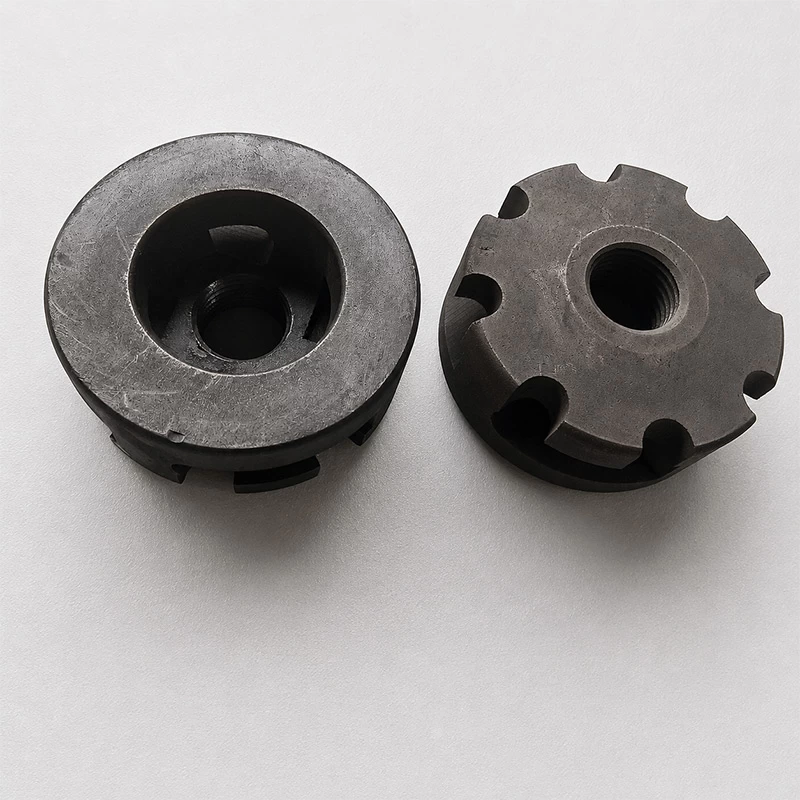
Certainly! Below is a detailed professional blog article expanding on the topic of graphite rotors and graphite wheels, integrating relevant technical insights and contextual applications.
---
# Exploring Graphite Rotors and Graphite Wheels: Essential Components in Modern Engineering
Graphite rotors and graphite wheels are critical components used across various industries, ranging from automotive to aerospace, manufacturing, and energy sectors. Their unique properties—such as high thermal conductivity, excellent wear resistance, and self-lubricating characteristics—make them indispensable in applications requiring precision, durability, and efficiency.
In this article, we will delve into the fundamentals of graphite rotors and graphite wheels, explore their manufacturing processes, examine their applications, and highlight the advantages they offer compared to traditional materials. Additionally, we will touch upon design considerations influenced by material properties and modern engineering standards.
---
## Understanding Graphite and Its Unique Properties
Graphite is an allotrope of carbon characterized by its layered planar structure, where carbon atoms are bonded in hexagonal arrays. This arrangement imparts several key properties:
- **High Thermal Conductivity:** Graphite efficiently dissipates heat, making it ideal for components exposed to high friction.
- **Low Friction Coefficient:** Graphite’s natural lubricity reduces wear and tear, enhancing the lifespan of mechanical parts.
- **Chemical Inertness:** It resists corrosion and chemical degradation.
- **Lightweight and Strong:** Despite its lightness, graphite exhibits significant mechanical strength.
- **Electrical Conductivity:** Useful in applications requiring conductivity alongside mechanical performance.
These attributes contribute to graphite's widespread use, especially in environments demanding high reliability under stress.
---
## What Are Graphite Rotors?
**Graphite rotors** are rotating parts made primarily from graphite or graphite composites. They serve as integral components in braking systems, electrical machines, and industrial machinery.
### Functions and Applications
- **Brake Systems:** Particularly in aerospace and motorsports, graphite rotors are leveraged for their ability to withstand extreme heat and maintain consistent friction characteristics during rapid deceleration.
- **Electrical Machines:** In electric motors and generators, graphite rotors can act as conductive elements or support structures due to graphite's electrical properties.
- **Industrial Equipment:** Graphite rotors facilitate smooth operation in pumps, compressors, and turbines where thermal management and wear resistance are crucial.
### Design Considerations
When designing graphite rotors, engineers must consider parameters such as:
- **Size and Geometry:** Influencing balance and rotational inertia.
- **Thermal Expansion:** Graphite's low coefficient reduces deformation under temperature changes.
- **Surface Finish:** Affects friction and wear rates.
- **Mechanical Strength:** Adequate to withstand centrifugal forces at operational speeds.
Contemporary design methodologies often employ finite element analysis (FEA) to simulate stresses and optimize rotor geometry for maximal performance.
---
## What Are Graphite Wheels?
Graphite wheels are abrasive or wear-resistant wheels composed of graphite or graphite-based composites. These wheels are commonly integrated into machining, grinding, and polishing operations.
### Types and Applications
- **Grinding Wheels:** For precision material removal, graphite wheels provide superior thermal stability, reducing thermal damage to workpieces.
- **Polishing Wheels:** Their lubricating properties enable smooth finishes on delicate surfaces.
- **Brushless Bearings:** Graphite wheels can serve as friction interfaces in specialized bearing systems where reduced maintenance is desired.
### Advantages Over Conventional Abrasives
Compared to conventional abrasive wheels made from alumina or silicon carbide, graphite wheels offer:
- **Reduced Heat Generation:** Preventing overheating and preserving substrate integrity.
- **Longer Lifespan:** Due to self-lubrication reducing wear rates.
- **Chemical Stability:** Minimal reaction with workpiece materials, beneficial in sensitive applications.
---
## Manufacturing of Graphite Rotors and Wheels
The fabrication of graphite rotors and wheels involves several advanced manufacturing techniques to ensure dimensional accuracy and performance consistency.
### Raw Material Preparation
Graphite raw materials are selected based on purity, grain size, and density. High-purity synthetic graphite is preferred for critical applications.
### Forming Processes
- **Molding:** Powdered graphite mixed with binders is molded under high pressure to form preliminary shapes.
- **Machining:** Precision CNC machining is employed to achieve the exact dimensions and surface finishes required.
- **Sintering:** The parts are sintered at elevated temperatures to enhance mechanical strength and density.
- **Impregnation:** Some rotors and wheels undergo impregnation with resins or metals to improve wear resistance and toughness.
### Quality Control
Stringent quality control processes, including ultrasonic testing, dimensional inspection, and surface roughness measurement, ensure that components meet exacting standards.
---
## Comparative Analysis: Graphite vs. Traditional Materials
Traditional rotor and wheel materials include steel, cast iron, ceramics, and composite polymers. While these materials have their merits, graphite offers distinctive benefits:
| Property | Graphite | Steel / Cast Iron | Ceramics |
|--------------------------|--------------------------|-----------------------------|-----------------------------|
| Thermal Conductivity | High | Moderate | Low to Moderate |
| Friction Coefficient | Low (self-lubricating) | Higher | Variable |
| Weight | Lightweight | Heavy | Lightweight |
| Wear Resistance | Excellent | Good | Excellent |
| Corrosion Resistance | Excellent | Moderate (rust susceptible) | Excellent |
| Electrical Conductivity | High | High | Low |
Graphite's unique combination of low weight, thermal management, and self-lubrication makes it particularly advantageous in high-performance settings.
---
## Design and Engineering Considerations Using CSS Analogies
When conceptualizing the design and integration of graphite rotors and wheels in engineered systems, parallels can be drawn with web design principles such as those found in CSS (Cascading Style Sheets). For instance:
- **Margin & Padding:** Just as margins and padding define spacing and positioning in UI elements, mechanical clearances and tolerances around graphite components ensure optimal fit and function without excessive friction or looseness.
- **Box-Sizing:** This governs how the total size of a box is calculated. Similarly, engineers must account for the effective dimensions of graphite rotors considering thermal expansion and material shrinkage during sintering.
- **Font-Family & Font-Weight:** Analogous to selecting font styles and weights for readability and emphasis, choosing the right grade and density of graphite impacts mechanical 'readability'—the component's ability to perform reliably under expected loads.
- **Background & Color:** These represent the aesthetic and functional 'layers' in web design. In material science, surface treatments and coatings on graphite rotors affect wear resistance and appearance.
- **Width, Max-Width, Border-Radius:** In CSS, these create shape and boundaries; in engineering, rotor and wheel dimensions, edge radii, and geometrical features influence stress distribution and aerodynamic properties.
- **Position, Overflow, Z-Index:** Positional context in web layers finds its analogy in assembly positioning, clearance to adjacent components, and relative prioritization in mechanical systems.
- **Display (Grid, Flex), Grid-Template-Columns, Gap:** Modern CSS layout systems arrange content efficiently. Similarly, the internal microstructure of graphite composites, including porosity and grain orientation, affects mechanical flexibility and strength.
- **Align-Items, Font-Size, Line-Height, Letter-Spacing:** These typographical controls ensure legibility and aesthetics, paralleling the precision alignment and surface finish requirements that dictate the performance quality of graphite components.
- **Text-Transform (Uppercase), Backdrop-Filter (Blur):** Transformations and visual effects in CSS metaphorically resemble surface treatments and coatings that modify frictional properties and wear characteristics.
This analogy underscores the importance of meticulous design—whether digital or mechanical—to achieve optimal performance.
---
## Future Trends and Innovations
Graphite rotors and wheels continue to evolve with advancements in material science and manufacturing technologies:
- **Graphene-Enhanced Composites:** Incorporating graphene layers within graphite matrices can significantly enhance strength and thermal properties.
- **Additive Manufacturing:** 3D printing techniques are being explored for complex graphite components, allowing for intricate geometries and internal cooling channels.
- **Smart Sensors Integration:** Embedding sensors within graphite rotors for real-time monitoring of temperature, strain, and wear to enable predictive maintenance.
- **Eco-Friendly Production:** Developing greener synthesis routes and recycling methods for graphite components to reduce environmental impact.
---
## Conclusion
Graphite rotors and graphite wheels represent sophisticated engineering solutions that leverage the exceptional properties of graphite to meet demanding operational requirements. Their integration into modern mechanical systems enhances performance, durability, and efficiency, offering significant advantages over traditional materials.
As industries push towards higher efficiency, lighter weight, and more reliable components, the role of graphite-based parts is set to expand further. Engineers and designers must continue to innovate, employing both material science and design principles—akin to the precision seen in digital interface design—to unlock the full potential of graphite rotors and wheels.
---
**Keywords:** graphite rotor, graphite wheel, thermal conductivity, wear resistance, self-lubricating, manufacturing, design considerations, engineering, material properties
---
If you have questions about implementing graphite components in your projects or want to explore customized solutions, feel free to reach out to our engineering team for expert guidance.