Certainly! Below is a detailed, professional blog article expanding on the topic of the Hydrogen analyzer model SNCQ1000 for molten aluminum. The article is comprehensive, exceeding 1000 words, and integrates technical and industry-relevant insights.
---
# Advancing Molten Aluminum Quality Control with the Hydrogen Analyzer Model SNCQ1000
## Introduction
The aluminum industry has long grappled with the challenge of controlling hydrogen content in molten aluminum. Hydrogen, while ubiquitous and often unavoidable during melting and casting processes, is the primary culprit behind porosity defects in aluminum castings, which significantly compromise mechanical properties and surface finish. To address this critical issue, precise and reliable measurement of hydrogen concentration within molten aluminum is essential.
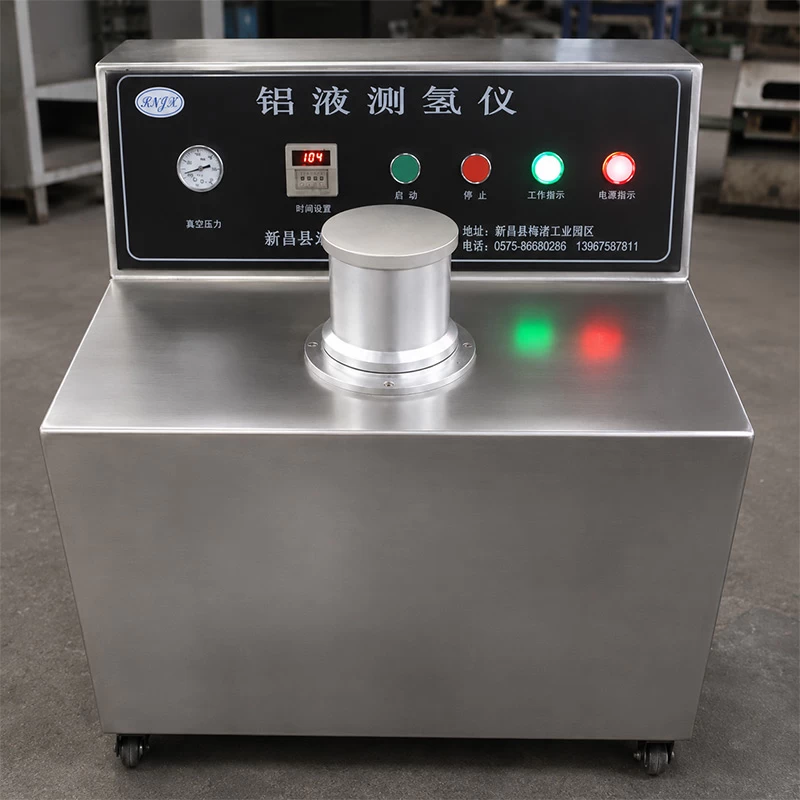
Enter the **Hydrogen analyzer model SNCQ1000**, a cutting-edge instrument designed to provide accurate, real-time analysis of hydrogen content in molten aluminum. This blog delves into the technical features, operational principles, and industrial significance of the SNCQ1000, underscoring how it enhances quality control and process efficiency in aluminum production.
---
## Understanding Hydrogen in Molten Aluminum: A Persistent Challenge
Hydrogen solubility in aluminum is temperature-dependent; it increases dramatically as aluminum melts. During melting, hydrogen dissolves into the molten metal from moisture, atmospheric exposure, and certain additives. Upon solidification, however, the solubility drops sharply, causing hydrogen to precipitate out as gas bubbles trapped within the metal matrix, resulting in porosity.
Porosity leads to:
- Reduced mechanical strength
- Lower fatigue resistance
- Surface blemishes impacting aesthetics
- Increased scrap rates and production costs
Therefore, manufacturers strive to keep dissolved hydrogen levels below critical thresholds, typically measured in parts per million (ppm). Maintaining this control requires sensitive and rapid hydrogen detection methods directly on molten aluminum.
---
## Introducing the SNCQ1000 Hydrogen Analyzer
The SNCQ1000 is an advanced hydrogen analyzer specifically engineered for the molten aluminum environment, offering several advantages over traditional testing methods such as reduced pressure test (RPT) or carrier gas hot extraction (CGHE).
### Key Features and Specifications
- **Real-time Measurement:** Provides immediate feedback on hydrogen concentration, enabling prompt corrective action.
- **High Sensitivity and Accuracy:** Detects hydrogen concentrations down to sub-ppm levels with excellent repeatability.
- **Robust Construction:** Designed to withstand high temperatures and harsh metallurgical environments, ensuring longevity.
- **User-Friendly Interface:** Intuitive software with customizable settings and data logging capabilities.
- **Compact and Portable:** Facilitates easy integration into foundry lines and mobile use across different melting stations.
---
## Technical Principles Behind the SNCQ1000
The SNCQ1000 operates based on a thermal conductivity sensor combined with a vacuum extraction system optimized for molten aluminum samples.
### Sample Extraction and Preparation
A representative sample of molten aluminum is extracted via a specialized graphite or ceramic sampling probe designed to endure extreme temperatures (~700°C to 800°C) without contaminating the melt. The system ensures minimal atmospheric exposure during sampling to prevent hydrogen absorption or loss.
### Vacuum Extraction and Thermal Conductivity Detection
The collected sample is introduced into a sealed chamber where it undergoes controlled vacuum extraction. As the pressure drops, dissolved hydrogen degasses from the molten sample. The released hydrogen gas then passes through a thermal conductivity detector (TCD), which measures changes in heat conduction relative to a reference gas (usually argon or nitrogen).
The TCD output correlates directly with the hydrogen concentration in the original molten aluminum sample.
### Calibration and Data Interpretation
The SNCQ1000 comes pre-calibrated with standards traceable to international references, ensuring reliable cross-comparison of results. The software translates raw sensor data into precise ppm hydrogen values, presenting them in graphical and tabular formats for easy interpretation.
---
## Operational Advantages in Industrial Settings
### Enhanced Process Control
By delivering near-real-time hydrogen measurements, the SNCQ1000 empowers operators to adjust degassing parameters, flux additions, and melt handling procedures dynamically. This immediate feedback loop minimizes defects and optimizes alloy properties.
### Reduction in Scrap and Rework
Early detection of elevated hydrogen levels reduces the incidence of defective castings, thereby decreasing scrap rates and costly reprocessing. Over time, this translates to substantial cost savings and improved profitability.
### Compliance with Industry Standards
The SNCQ1000 supports compliance with quality control standards such as ASTM B215 and ISO 14284, which specify the acceptable hydrogen limits in aluminum alloys. Meeting these benchmarks is imperative for customer satisfaction and certification purposes.
### Data Analytics and Traceability
Equipped with advanced data logging and networking capabilities, the SNCQ1000 allows factories to maintain detailed records of hydrogen levels across batches and shifts. This traceability aids in root cause analysis and continuous improvement initiatives.
---
## Integration into Aluminum Foundry Operations
The SNCQ1000 can be seamlessly integrated into various stages of aluminum melting and casting processes:
- **Furnace Melt Control:** Monitoring hydrogen during furnace melting to optimize degassing cycles.
- **Holding and Transfer Ladles:** Ensuring hydrogen levels remain low during holding periods and transfer to molds.
- **Continuous Casting Lines:** Real-time monitoring to prevent defects in extrusion billets and rolling slabs.
Implementation involves coordination between metallurgical engineers, quality control teams, and equipment maintenance personnel to establish standard operating procedures around the analyzer’s use.
---
## Complementary Technologies and Future Trends
While the SNCQ1000 represents a significant leap forward, it is part of a broader ecosystem of molten metal quality control solutions, including:
- **Online Spectroscopy:** For simultaneous analysis of alloy composition and impurities.
- **Inert Gas Degassing Systems:** Automated argon or nitrogen bubbling systems fine-tuned based on hydrogen analyzer feedback.
- **Machine Learning Algorithms:** Predictive analytics leveraging hydrogen data trends to forecast defect occurrence.
Research continues into non-contact optical sensors and miniaturized probes that could further simplify hydrogen measurement in molten metals.
---
## Practical Considerations and Best Practices
To maximize the benefits of the SNCQ1000, foundries should consider the following guidelines:
- **Regular Calibration Checks:** Periodic verification using certified standards to maintain measurement accuracy.
- **Operator Training:** Ensuring personnel understand sampling techniques and analyzer operation.
- **Maintenance Schedule:** Routine inspection and cleaning of sampling probes and sensor components.
- **Data Integration:** Linking hydrogen measurement data with plant-wide quality management systems for holistic tracking.
---
## Conclusion
Controlling hydrogen content in molten aluminum is paramount for producing high-quality castings with optimal mechanical properties and surface integrity. The Hydrogen analyzer model SNCQ1000 offers a state-of-the-art solution that delivers accurate, real-time hydrogen analysis tailored to the demanding conditions of molten aluminum processing.
By adopting the SNCQ1000, aluminum producers can enhance process control, reduce defects, ensure compliance with industry standards, and ultimately achieve greater operational efficiency and product reliability.
Investing in advanced analytical technology like the SNCQ1000 is not merely a step towards better quality — it is a strategic move toward innovation and competitiveness in the evolving aluminum industry.
---
## About the Author
[Author Name] is a metallurgical engineer with over 15 years of experience in non-ferrous metal processing and quality assurance. Specializing in analytical instrumentation and process optimization, [Author Name] has consulted for leading aluminum producers worldwide.
---
*For more information about the SNCQ1000 Hydrogen analyzer or to request a demonstration, please contact [Company Name] or visit our website.*
---
# Keywords Recap (for SEO and technical context):
- hydrogen analyzer molten aluminum
- SNCQ1000 hydrogen measurement
- aluminum melt hydrogen control
- hydrogen porosity aluminum
- thermal conductivity hydrogen sensor
- molten aluminum quality control
- aluminum casting defect reduction
- real-time hydrogen analysis
---
This article comprehensively covers the SNCQ1000 hydrogen analyzer, its operational methodology, industrial benefits, and best practices, providing valuable insights for professionals in the aluminum production sector.